
CNC Deburring Brushes for Machined Components
Bring deburring into your CNC process.
CE Brush manufactures custom brushes for flat surfaces, external contours, internal bores, and other machined features. Choose an application below to find a suitable brush type.
Explore CNC Deburring Solutions by Application
Flat Surfaces
External Edges and Contours
Internal Bores and Cross-Holes
Brush Types for CNC Deburring
The right brush shape depends on where the burr is located and how the brush needs to contact the part.
Abrasive Disc Brushes
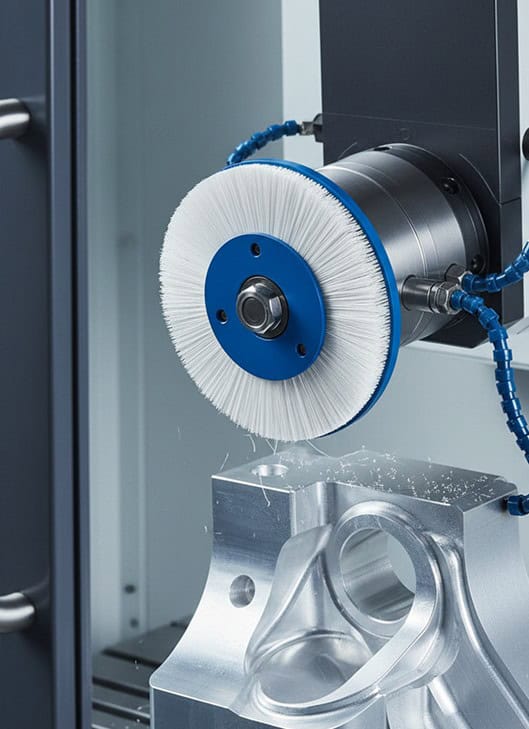
For face-milled surfaces and broad, flat components. Commonly used on valve bodies, transmission plates, machined castings, and sealing faces.
Abrasive Wheel Brushes
For external edges and changing profiles. Commonly used on gears, splines, threads, shafts, and curved components.
Abrasive Roller Brushes
For wide surfaces and longer component profiles.
Commonly used on stepped shafts, journals, camshafts, and continuous production lines.
Twisted-Wire Bore Brushes
For internal bores, cross-holes, threads, and narrow passages.
Commonly used in hydraulic components, valve blocks, internal cylinders, and intersecting galleries.
Abrasive End Brushes
For small or confined areas.
Commonly used in pockets, recesses, narrow slots, blind holes, and localised features.
Abrasive Cup Brushes
For broad contact on flat, recessed, or lightly contoured surfaces.
Commonly used on cylinder heads, machined castings, housing pockets, and surface-preparation applications.

Deburring Flat and Face-Milled Surfaces
Face milling can leave burrs around the outer edge of a part, across holes, or along raised surface features.
Disc and cup brushes can pass across the machined face as part of the CNC cycle. This helps reduce separate hand-finishing work after machining.
Typical applications include:
- Valve bodies
- Transmission plates
- Cylinder heads
- Sealing faces
- Flat steel components
- Machined aluminium castings
Deburring External Edges and Contours
Wheel and roller brushes can follow the outside shape of a component while contacting exposed burrs and edges.
Typical applications include:
- Gear teeth
- Drive splines
- Keyways
- Camshaft profiles
- Stepped shafts
- Curved machined parts
Deburring Bores,
Threads, and Cross-Holes
Twisted-wire and end brushes are designed to reach these areas during an automated machining or finishing process.
Typical applications include:
- Internal bores
- Cross-holes
- Tapped threads
- Deep recesses
- Oil galleries
- Hydraulic passages
- Blind holes
A More Consistent Way to Handle CNC Deburring
Less Manual Finishing
More Consistent Results
Better Access
Fewer Handling Steps
Reduce movement between machining and separate finishing stations.
Choosing the Right Brush
-
 Identify the Burr
Confirm where the burr appears and which area needs to be finished. Different edge characteristics require distinct abrasive filament configurations. -
 Match the Brush Shape
Select a disc, wheel, roller, bore, end, or cup brush based on the component geometry to ensure perfect tool-to-workpiece contact pathing. -
 Review the Machine Setup
Confirm the available workspace volume, mounting method, toolholder specifications, coolant access, and target operating conditions.
What Sets CE Brush Apart
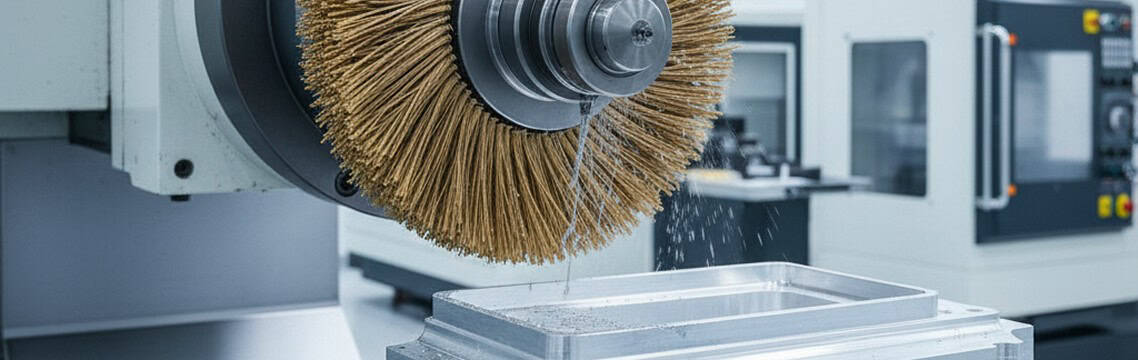
Custom industrial brush manufacturing with direct support, flexible quantities, and solutions developed around your application.
-
 Custom-Made for Your Application
Brush dimensions, filament, trim length, density, and mounting can be tailored to suit your component, process, and machine requirements. -
Direct From the Manufacturer
Discuss your requirements directly with the team responsible for manufacturing your brushes, from initial specifications to repeat orders. -
Flexible Order Quantities
Support for custom prototypes, small quantities, and recurring production needs without being limited to standard configurations. -
Made in Malaysia
Local manufacturing supports more direct communication, custom development, and reliable repeat supply.